
The Six-Second Challenge – How Much Can You Really See?
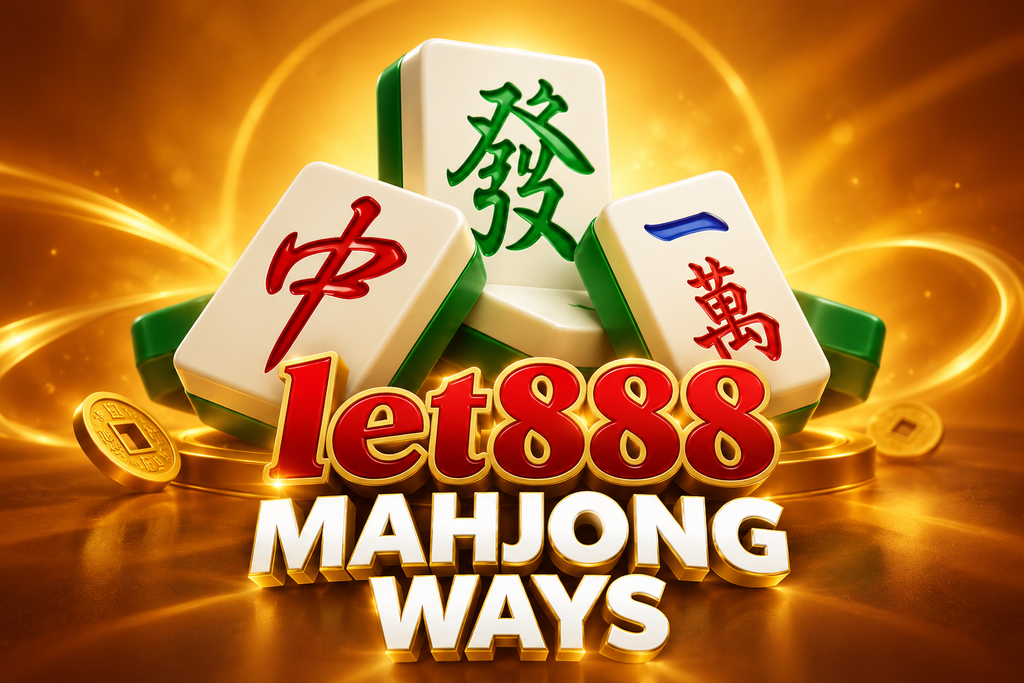
Look at the Mahjong Ways artwork for six seconds, then turn your attention elsewhere. Can you remember the arrangement of the tiles, their colors, and which symbol appeared in the center?
It sounds easy until you try.
The golden background, glossy white tiles, and colorful markings compete for attention. Your eyes naturally move toward the brightest areas, but those are not always the details you remember most accurately.
This simple experiment offers an interesting way to explore let888 Mahjong Ways beyond its appearance. Instead of concentrating entirely on movement and visual effects, players can challenge themselves to notice small details that might otherwise disappear from memory.
Try answering three questions after each observation:
- Which tile attracted your attention first?
- How many different symbol colors did you notice?
- Could you describe the tile arrangement without looking again?
The purpose is to develop visual awareness, not to predict game outcomes. Even a static promotional image can become an enjoyable observation challenge.
Reading Mahjong Ways Through Three Visual Layers
Mahjong Ways uses imagery inspired by Mahjong tiles, but recognizing familiar symbols and understanding a digital game’s interface are different skills.
A useful observation method separates the screen into three layers.
Layer One – Recognize the Main Shapes
Begin with the objects that occupy the most space.
In the let888 Mahjong Ways artwork, three prominent tiles form a triangular composition. The taller central tile immediately establishes the focal point, while the two angled tiles create a sense of depth.
Before trying to identify individual markings, notice how the tiles relate to one another.
Are they upright, tilted, overlapping, or partially hidden?
Recognizing these relationships makes complex compositions easier to understand.
Layer Two – Separate Colors From Symbols
The next step is to distinguish color from meaning.
Green, red, and blue markings make Mahjong-themed artwork visually appealing. However, remembering that a tile was red is not the same as remembering the symbol displayed on it.
A practical approach is to identify the symbol first and use color as a secondary memory cue.
This distinction matters because decorative color can attract attention without providing any information about what happens next in a game.
Layer Three – Identify Useful Information
Finally, separate gameplay information from decoration.
Large titles, golden lighting, animated backgrounds, and decorative objects help create atmosphere. They should not be confused with rules, instructions, or gameplay indicators.
When exploring a game on let888, prioritize information displayed by the actual interface rather than assumptions based on promotional artwork.
Create Your Own Mahjong Tile Memory Test
One way to make Mahjong Ways more engaging is to turn observation into a small personal challenge.
You do not need special equipment. A screenshot, a piece of paper, and a timer are enough.
The First Round – Quick Recognition
Study a Mahjong-themed image for five seconds.
Hide it and write down everything you remember.
Avoid describing the general atmosphere. Concentrate on specific details such as the number of visible tiles, their positions, and the markings you recognized.
Check your answers against the original image.
The Second Round – Position Memory
Look at the same picture again, this time for ten seconds.
Imagine dividing the artwork into a three-by-three grid.
Try remembering which details appeared near the top, center, and bottom.
This exercise is particularly useful for discovering whether you remember objects accurately or simply remember their overall appearance.
The Third Round – Describe Without Looking
After observing the image, explain it to another person without showing them the picture.
Ask them to sketch the arrangement using your description.
Compare their drawing with the original.
You may discover that phrases such as “a large green symbol in the middle” communicate much less information than expected.
The challenge becomes more entertaining when each round introduces a different picture.
Why Golden Effects Can Distract From Important Details
Bright colors are among the strongest visual elements in Mahjong Ways artwork.
The combination of amber lighting, white tile surfaces, and metallic lettering creates a strong contrast. It helps the image stand out, even when viewed at a small size.
However, visual excitement can influence what a player notices.
Consider these common situations.
The Brightest Object Gets the Most Attention
A glowing background may draw your eyes before the actual game elements.
When this happens, pause briefly and locate the information you intended to read.
Familiar Images Create Expectations
Seeing a particular symbol several times can make it feel unusually important.
Repetition alone, however, does not establish that the next result will follow a recognizable sequence.
Visual patterns can be interesting without providing reliable predictions.
Movement Makes Details Harder to Remember
Fast transitions can create the impression that many things happened simultaneously.
If an interface offers animation or display settings, adjusting them to a comfortable level may make the experience easier to follow.
The key distinction is simple. Attractive design creates atmosphere, while game rules determine how the game operates.
The Quiet-Screen Method for Better Concentration
A busy screen can make an otherwise straightforward game feel complicated.
For players who enjoy examining visual details, a quieter viewing environment may be more comfortable.
Before opening let888 Mahjong Ways, try preparing the screen with a few small adjustments.
Lower the brightness if the background appears excessively intense. Reduce unnecessary notifications, choose a comfortable viewing position, and make sure the text remains readable.
Next, identify the main parts of the interface before interacting with anything.
Look for the game title, available controls, instructions, and any information explaining how the game works.
Avoid pressing unfamiliar buttons simply because their design looks attractive.
If the game provides a help screen, read it before assuming that symbols behave like traditional Mahjong pieces.
This approach is especially helpful for anyone exploring the game for the first time.
It also helps distinguish the game’s actual controls from decorative elements that serve no interactive purpose.
A Seven-Minute Mahjong Ways Observation Session
A short, structured activity can be more interesting than repeatedly looking at the same screen without a clear purpose.
Here is a seven-minute challenge built around visual awareness.
| Time | Activity | Main Objective |
|---|---|---|
| First minute | Observe the artwork | Identify major visual elements |
| Second minute | Focus on tile markings | Improve symbol recognition |
| Third minute | Hide and recall | Test visual memory |
| Fourth minute | Examine the interface | Separate controls from decoration |
| Fifth minute | Compare observations | Correct remembered details |
| Sixth minute | Repeat with a new image | Practice recognition |
| Final minute | Record three discoveries | Identify what you learned |
The activity can be completed with screenshots or promotional images. It does not require a live game session.
For a more difficult version, reduce the observation time while keeping the number of questions unchanged.
For an easier version, start by identifying only tile positions before attempting to remember individual symbols.
The challenge is successful when your observations become more precise, regardless of whether you remember every detail.
Keep a Small Tile Journal Instead of Guessing Patterns
A personal observation journal adds another dimension to the experience.
Rather than recording imagined winning sequences, write down details that can actually be checked.
For example:
“Three large tiles appeared in the image. The central tile was upright, while the other two leaned inward. I remembered the green marking but confused the symbols on the outer tiles.”
That entry is specific enough to evaluate.
A useful journal can contain four fields:
- Image or screen observed
- Observation time
- Details remembered correctly
- Details that were missed
After several exercises, look for changes in your own attention.
Perhaps you consistently remember colors but forget positions. Maybe you notice large objects while overlooking smaller labels.
These are meaningful observations because they describe your viewing habits.
They are not evidence of future gameplay results.
Give Mahjong Ways a Different Kind of Challenge
Many people associate a gaming challenge with completing difficult levels or reaching an impressive score.
A Mahjong-themed observation challenge offers another possibility.
Invite a friend to view the same image for a limited time. Then ask both participants to list the objects they remember.
Award one point for each correctly identified feature, such as tile position, marking color, or the number of visible symbols.
Avoid giving points for vague descriptions like “golden background” when more precise details are available.
You can also create themed rounds:
- Color Round – Remember symbol colors.
- Position Round – Recall where the tiles appeared.
- Detail Round – Identify small decorative features.
- Description Round – Explain the image without showing it.
These activities use the familiar appearance of Mahjong Ways in a different way.
The challenge becomes about attention, communication, and memory rather than simply watching visual effects.
Frequently Asked Questions About LET888 Mahjong Ways
What makes Mahjong Ways visually recognizable?
Mahjong-inspired tiles, colorful engraved markings, and layered arrangements give the game its recognizable appearance. Its promotional artwork often emphasizes these features through lighting and contrast.
Can tile colors help predict game results?
No reliable prediction can be made from promotional colors or decorative arrangements. Players should consult the actual game rules to understand how symbols and results work.
Is the tile-spotting challenge part of the official game?
No. The observation exercises described here are independent activities designed to make Mahjong-themed images more engaging. They are not official gameplay features.
Can I try these activities on a mobile phone?
Yes. A phone screenshot is sufficient for most exercises. For more detailed comparisons, a larger display may make small tile markings easier to examine.
What should beginners check before playing Mahjong Ways?
Start with the available game instructions. Identify the controls, understand what the displayed information means, and avoid treating decorative artwork as an explanation of game mechanics.
Does a faster observation time mean better gameplay results?
No. Faster observation may improve performance in a memory challenge, but it does not change the underlying rules or determine the results of a digital game.